


Narrative Combat began as a hobby but became an experiment.
The premise was simple. Our world is increasingly shaped by narratives, and the internet has made producing, distributing, and monetizing those narratives easier than ever. I wanted to examine them more critically to separate what sounded persuasive from what could actually withstand scrutiny.
Along the way, I found myself increasingly drawn toward the stories we tell ourselves on financial Twitter (FinTwit). That made sense given my professional background, but something else became increasingly obvious.
The problem is bigger than narratives.
What was once a scattered collection of newsletters, chat rooms, and financial gurus (furus) has become a multibillion-dollar retail information economy influencing the decisions of tens of millions of individual investors.
In professional investing, asking someone to entrust you with their capital and confidence generally means submitting to scrutiny.
Fund managers provide detailed biographies, audited financial statements, performance records, risk/exposure/attribution data, offering documents, service-provider information, and references.
Institutional investors then spend considerable time and money trying to determine whether any of that adds up to justify an allocation.
But the retail information economy has developed virtually none of that infrastructure.
Performance is almost always self-reported. Identities and credentials are often missing or difficult to verify. Losing trades can disappear into the timeline. Track records may begin and end wherever convenient. Marketing claims can travel further than the evidence supporting them.
And yet real money changes hands based on those claims.
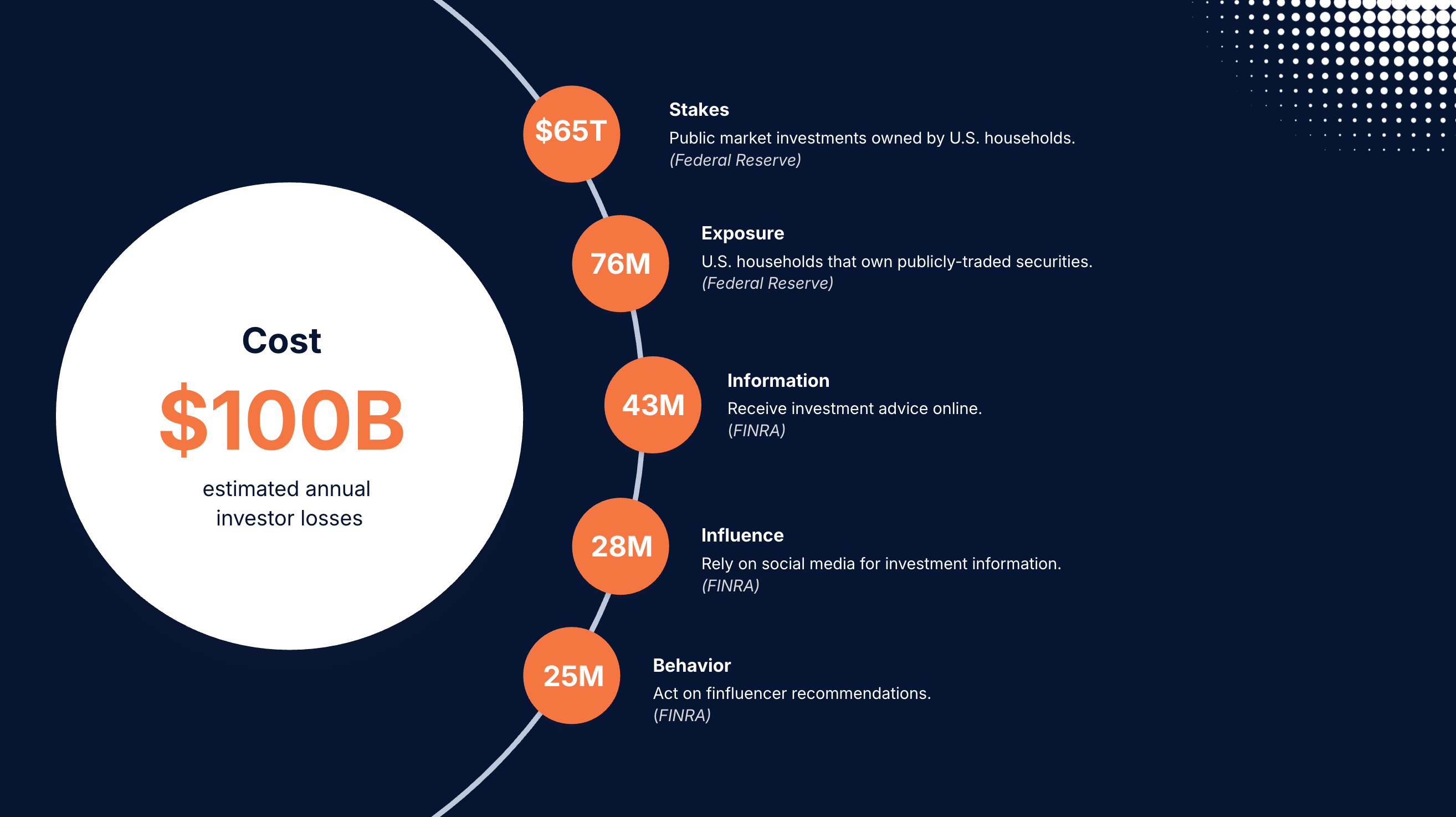
Individual investors now operate inside an enormous information marketplace populated by hundreds if not thousands of newsletters, trading services, Discords, Substacks, social media influencers (finfluencers), research products, YouTube streams, podcasts, courses, algorithms, anonymous accounts, and self-proclaimed experts of every imaginable variety.
Some are good. Some are terrible. Most exist somewhere in between.
What they increasingly share is the ability to make claims at a scale that would have been impossible a decade ago.
The infrastructure for making those claims has become extraordinarily sophisticated.
But the infrastructure for evaluating them has not.
So we’re building it.
Narrative Combat is becoming Speculah, a name derived from the Latin speculare and its ironic use in anime/fan culture to reference wild, unverified speculation.
Speculah is an independent research project built around a simple idea:
Claims are cheap. Confidence is abundant. Evidence is scarce.
We aim to bring the habits of institutional due diligence to a marketplace that rarely receives it.
That means measuring what can be measured. Reconstructing performance where possible. Examining methodology. Testing claims against evidence. Looking for fragility hidden inside headline results. Distinguishing luck from skill, good process from good outcomes, and reality from marketing.
It also means recognizing the limits of measurement.
Not every important question fits neatly into a spreadsheet. Incentives matter. Disclosure matters. Business practices matter. Provenance matters. Behavior matters.
Sometimes the most interesting story begins precisely where the quantitative analysis ends.
Speculah will operate at that intersection.
What we’re going to do
Our work will take several forms.
Evaluations will examine investment products, trading services, newsletters, communities, and other paid offerings using a consistent analytical framework informed by institutional investment, quantitative, and technical perspectives.
Investigations will follow interesting firms, claims, and characters wherever the evidence leads.
Research will explore the products, platforms, economics, and behaviors shaping the rapidly growing retail information economy.
And we’ll occasionally wax philosophical through a separate series on Effective Pragmatism (e/prag), a decision-making framework aimed at providing a broader lens for thinking about markets, information, expertise, incentives, and the strange epistemic environment the internet has created.
Underneath all of it will be the same discipline:
Show your work.
We won’t ask readers to accept conclusions because we say so.
We want the evidence, methodology, and reasoning to carry as much of that burden as possible.
We also acknowledge our own biases as we launch this new venture.
Decades of investment industry experience have taught us that most investors - professional and otherwise - have no durable edge when it comes to trading.
The closest thing to financial advice I’ve dispensed publicly is that most of us would be better served by ignoring much of the online hoopla and choosing instead to simply own cheap, liquid index funds.
That naturally gives us a skeptical prior, but skepticism is not a conclusion.
We are not starting from the premise that everyone selling investment information is a charlatan.
Quite the opposite, actually. A useful evaluation system has to be capable of surfacing genuine excellence.
So we expect to be surprised. In fact, we hope to be.
After all, as Claude Shannon observed, information lives in the surprise.
And Speculah would get pretty boring if everyone we examined generated poor results.
What happens to Narrative Combat?
It goes into the archive.
The essays and investigations published here were part of the path that led us to Speculah, and they will remain available as such.
But the posture changes from here.
Less combat and more measurement.
Less arguing with the internet and more examining what the internet produces.
Less desire to win the day’s discourse and more interest in building a durable body of work.
The antagonism, where warranted, will be professional. The deference will be to the evidence.
And we’ll retain enough of the old personality to throw the occasional jab when it’s deserved.
Access
Everything Speculah publishes is free (for now 😆).
The project is self-funded. We pay for the subscriptions required to evaluate the services we cover, along with the data, technology, and other infrastructure needed to do the work properly.
That arrangement gives us the freedom to build Speculah without asking much of anyone other than their attention. If the project eventually grows beyond what makes sense to support personally, we’ll figure out what comes next. Whatever form that takes, broad accessibility will always remain a priority.
Our independence is non-negotiable. Speculah will not accept payment from firms or individuals we evaluate. We will not sell favorable coverage or participate in referral or affiliate arrangements with the services we cover.
For now, the model is simple:
We pay for the research. You get to read it.
See a Discord trading service making fantastical claims on X?
We’ll Spec it.
Want another set of eyes on a product your financial advisor recommended?
We’ll Spec it.
Curious about that fund your grandmother is being pitched?
We’ll Spec it.
Why Speculah?
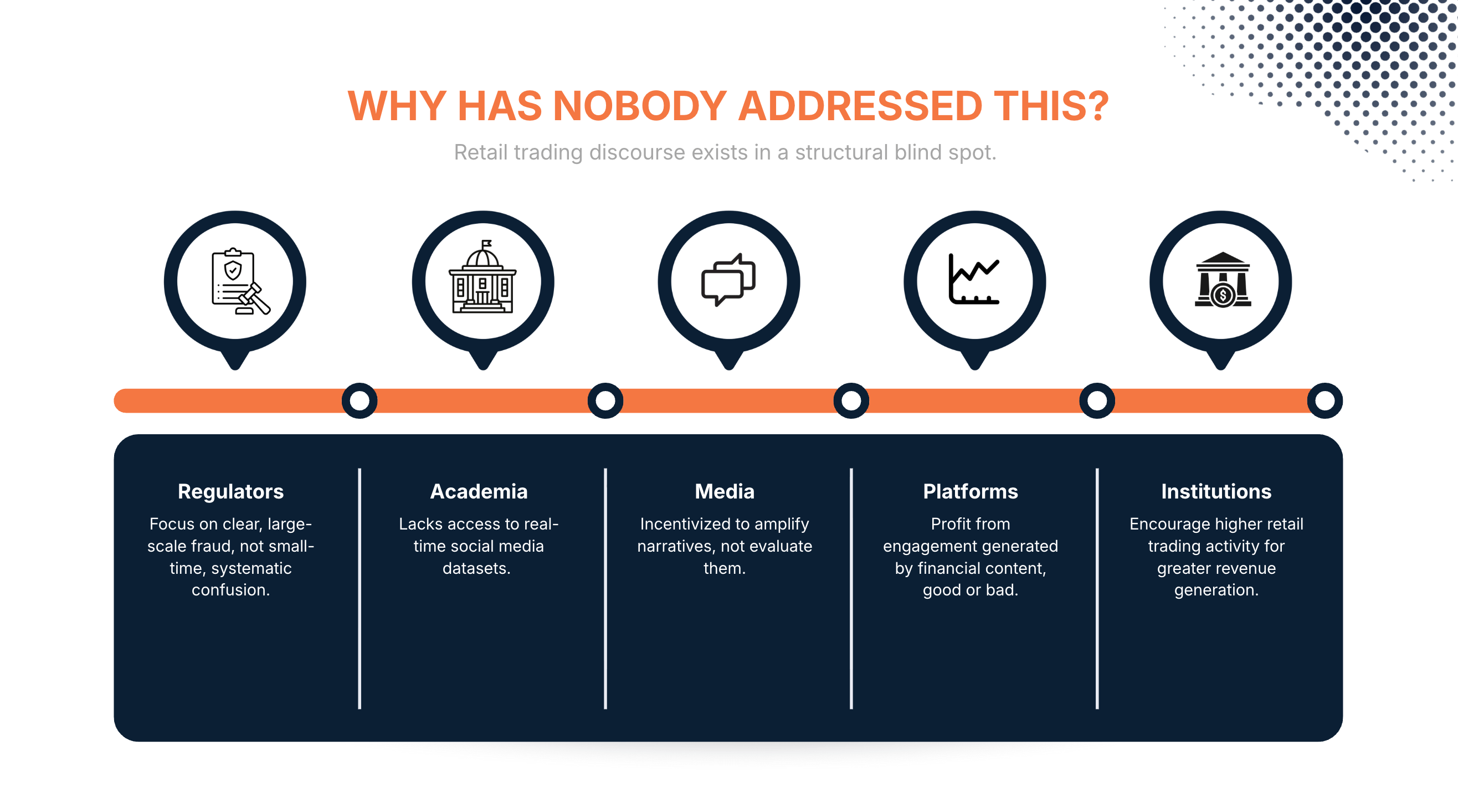
Because retail markets deserve better analytical infrastructure.
We’ve got Consumer Reports, Morningstar, movie critics, and restaurant reviews. We intend to perform a similar function for the retail investing ecosystem.
Because tens of millions of people now make consequential financial decisions inside an information environment where confidence is abundant, verification is scarce, and attention is often more valuable to the speaker than accuracy is to the listener.
What’s missing is an independent effort to apply institutional standards of diligence to the personalities, products, and claims shaping individual investment decisions. Speculah exists to fill that gap, and make that scrutiny accessible to the people whose money is at stake.
The world doesn’t need another authority telling people what to do, and Speculah is not in the business of providing investment advice. We’re not here to tell anyone what to buy, sell, subscribe to, or avoid.
If a trading service can show you every trade it makes without technically telling you what to do, surely we can show you our due diligence without doing so either.
What you do with it is entirely up to you.
Speculah provides analysis, not instructions.
Our job is to build better analytical tools so readers can calibrate their own confidence and make more informed decisions for themselves.
The value proposition is simple: outsourced institutional-quality due diligence for the retail investment community.
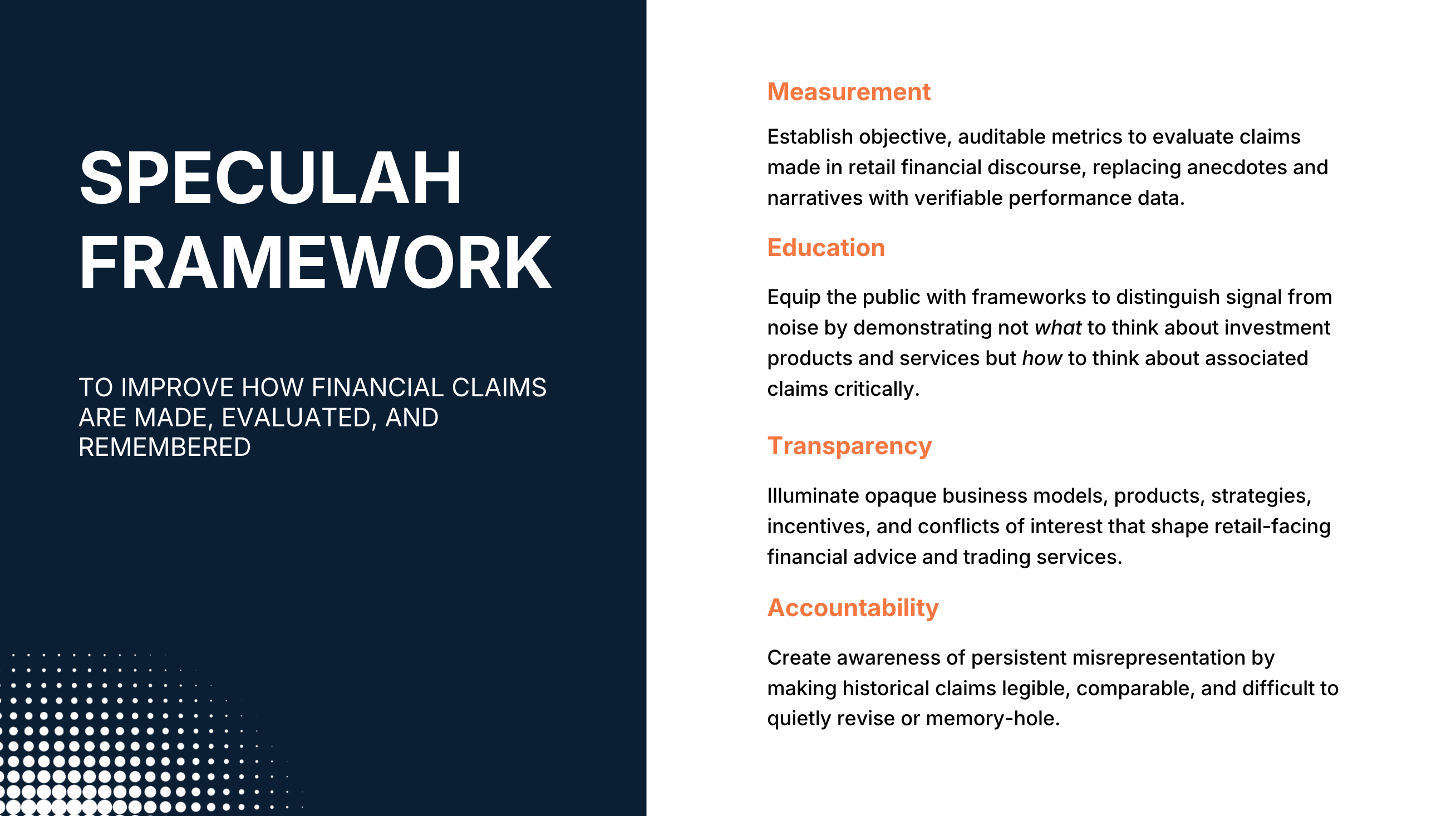
Measurement.
Evidence.
Transparency.
Accountability.
That’s what we’re building.
Think Hard.
